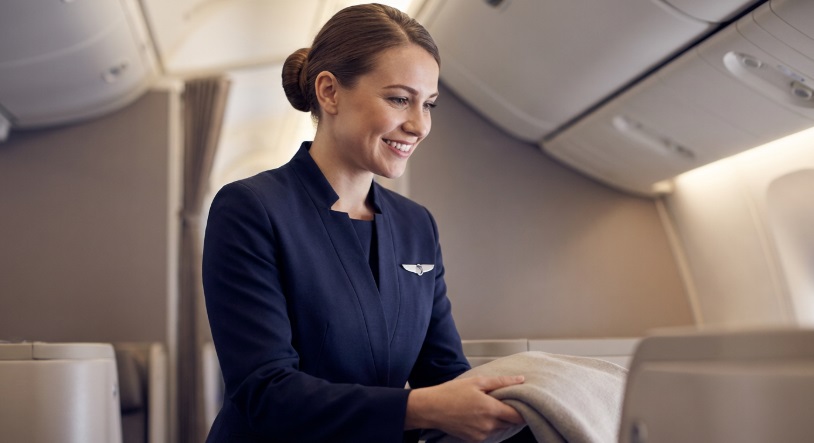
La vérité sur les visages des hôtesses et stewards de l'air
Rédigé par Alex Gervash, pilote professionnel (31 ans d'expérience) et spécialiste de la peur de l'avion (18 ans d'expérience, plus de 16 000 cas traités)
Est-ce que vous observez le visage des agents de bord pour y déceler des signes de danger ? Voici pourquoi cette stratégie se retourne contre vous.
Est-ce que vous observez sans cesse les agents de bord, en essayant de déceler des signes de danger sur leurs visages ?
« S'ils ont l'air sereins, je n'ai rien à craindre. S'ils ont l'air inquiets, c'est qu'il y a un problème. »
Voici le problème : les agents de bord sont des êtres humains qui ont leur propre vie, leurs propres problèmes et leurs propres émotions.
Peut-être vient-elle de se disputer avec son compagnon. Peut-être s'inquiète-t-il pour son parent malade. Peut-être est-elle épuisée après avoir assuré trois vols d'affilée. Peut-être doit-il gérer un passager désagréable à la rangée 12.
Tout cela n'a rien à voir avec la sécurité aérienne.
Mais ton esprit anxieux n'en a pas conscience. Il scrute leurs visages à la recherche d'un signe de danger. Et s'il y décèle un froncement de sourcils ou un air inquiet (ce qui arrive aux humains pour mille raisons), il en conclut : « Tu vois ? Même EUX sont inquiets ! »
La vérité ? Les agents de bord sont formés pour gérer les situations d'urgence avec calme. S'il y avait un vrai problème, vous le sauriez grâce à une communication claire, et non à travers des expressions faciales.
Cessez de prendre leurs expressions faciales comme indicateur de votre sécurité. Vous interprétez des signaux qui n'existent pas.
En bref
Est-ce que vous observez le visage des agents de bord pour y déceler des signes de danger ? Voici pourquoi cette stratégie se retourne contre vous.
Professionnels de la psychologie et de la thérapie des traumatismes
Professionnels de l'aviation commerciale
Spécialistes du traitement de la peur de l'avion
Alex apporte à phobia.aero une double perspective unique, alliant 31 ans d’une connaissance approfondie du cockpit à 18 ans d’expérience spécialisée au service de plus de 16 000 personnes qu’il a aidées à surmonter leur aérophobie. Formé en psychologie, Alex utilise des outils fondés sur des données probantes, tels que l'EMDR, la TCC et la Somatic Experiencing, pour s'attaquer aux causes profondes de la phobie de l'avion et de la peur des turbulences. En se concentrant sur la régulation du système nerveux, Alex fournit à ses clients les stratégies pratiques nécessaires pour gérer les crises de panique en avion et trouver un soulagement durable à leur anxiété liée au vol. Cette approche globale de la thérapie de l'aérophobie permet à ceux qui souffrent d'une phobie de l'avion de retrouver enfin leur liberté de voyager sans cette peur persistante de prendre l'avion.
Spécialiste en : peur de l'avion, traitement de l'aérophobie, spécialiste de l'anxiété liée aux vols, thérapie contre la peur des turbulences, crises de panique en avion, aviophobie, phobie de l'avion, accompagnement des passagers anxieux, anxiété au décollage, peur de l'atterrissage, traitement de la phobie de l'avion. Traitement fondé sur des données scientifiques utilisant l'approche « Somatic Experiencing », la thérapie EMDR, la régulation polyvagale, la régulation du système nerveux autonome et une prise en charge tenant compte des traumatismes.